


A complete guide to the Construction Industry Scheme: deduction rates, registration, gross payment status, monthly returns and the April 2026 CIS changes.


Free Agent



The UK VAT registration threshold is £90,000. Learn how the rolling 12-month test works, your real deadline, and what late registration actually costs.
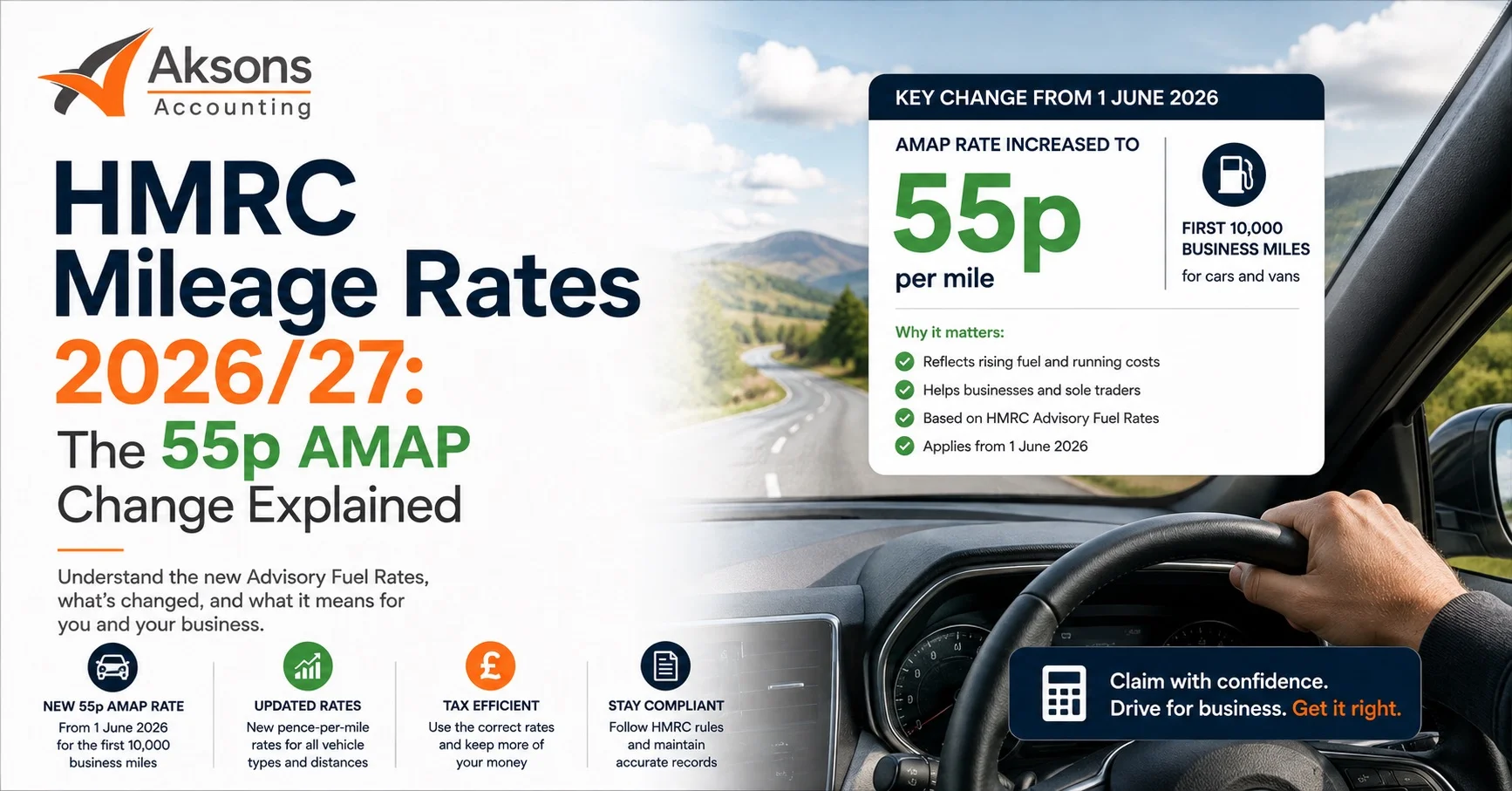
HMRC mileage rates rose to 55p per mile from 6 April 2026, the first rise in 15 years. Full rate tables, worked examples, and how to claim what you are owed.

Companies House identity verification is now a legal duty. Find your actual deadline, get your personal code, and avoid a blocked confirmation statement.

Electric vehicle tax relief for UK businesses explained: 100% first year allowances, VAT rules and 2026/27 BIK rates for company cars and sole traders.

Learn how dividends work for UK limited companies, including distributable profits, dividend tax rates, paperwork, salary vs dividends and common mistakes.

UK Company Formation Statistics: Trends, Insights & Business Advice | Aksons Accounting Services Ltd
Explore the latest UK company formation statistics and discover what they mean for new business owners. Learn practical accounting, tax and compliance insights from Aksons Accounting Services Ltd.

Learn about the new HMRC rules for 2026, including digital reporting, record keeping, tax compliance, and practical steps UK businesses can take to stay compliant and improve financial management.

Learn the Child Benefit tax rates for 2026, understand the High Income Child Benefit Charge, adjusted net income, Self Assessment obligations, and practical tax planning strategies for UK families.

Discover the key takeaways from the Spring Statement 2026 and what they mean for UK businesses, sole traders, and company directors. Learn how to respond to policy changes, strengthen financial planning, and prepare for evolving compliance requirements.

Learn how Making Tax Digital for Income Tax will affect sole traders, freelancers, and landlords. Understand quarterly reporting, compliance requirements, common challenges, and how to prepare before the new HMRC rules take effect.

Learn what the Companies House WebFiling security issue means for UK businesses, the risks of filing fraud, identity verification changes, and the steps directors can take to protect company records and strengthen compliance.

Learn how to complete your Self Assessment tax return in 2026, including deadlines, allowable expenses, payments on account, landlord income, freelancer taxes, and common HMRC filing mistakes.

Learn the latest Companies House filing fees in 2026, including confirmation statement costs, late filing penalties, company incorporation fees, and the hidden compliance risks UK businesses often overlook.

Learn the key ICO responsibilities for UK businesses in 2026, including ICO registration, GDPR compliance, data breach rules, subject access requests, CCTV obligations, marketing consent, and SME data protection risks.

A 2026 guide to UK average wage trends, including the latest salary figures, minimum wage changes, real pay growth, regional pressure, and what the numbers mean for businesses and workers.

From April 2026, HMRC’s Making Tax Digital rules will begin changing how sole traders and landlords report income tax. For many businesses, this is not just another compliance update. It changes the rhythm of financial management itself.

Choosing between sole trader and limited company status sets the tax you pay, the paperwork you file, and the personal risk you carry. The right answer depends on your profits, your sector, and your appetite for admin.